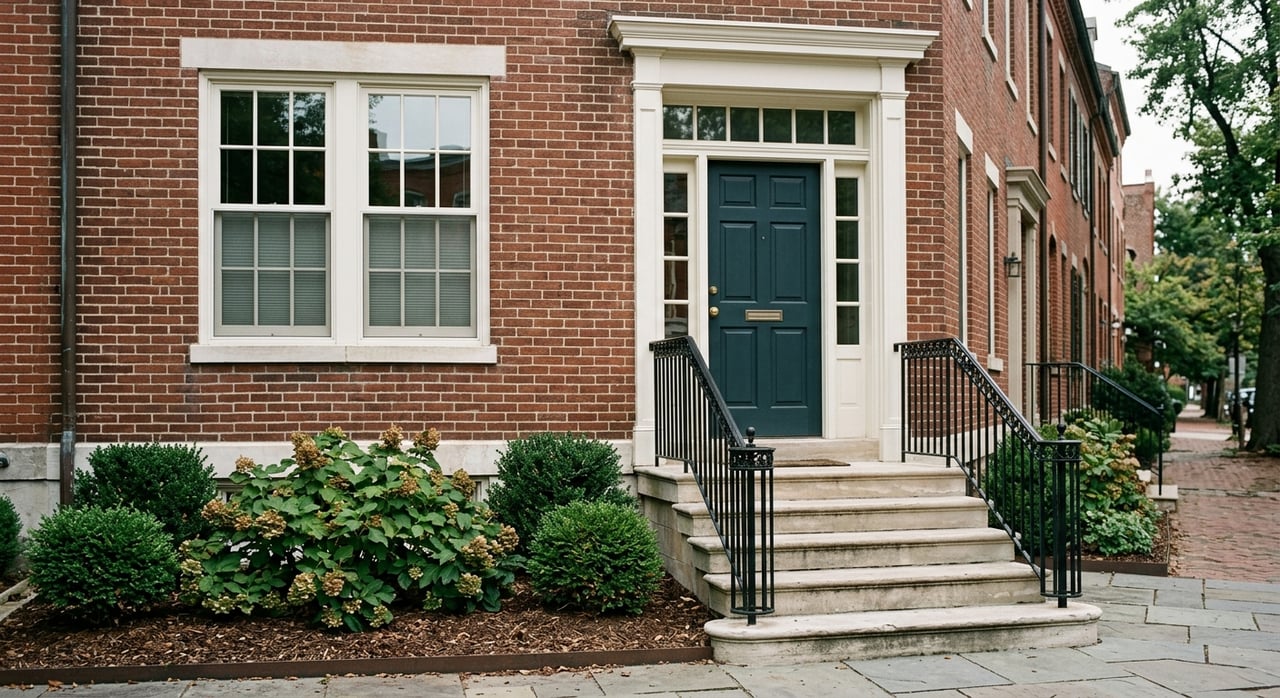
Wondering whether a historic rowhome or a newer home makes more sense in Alexandria? You are not alone. In a city with deep historic roots, transit-oriented growth, and a wide mix of condos, townhomes, and single-family homes, the right choice often comes down to how you want to live day to day. This guide will help you compare character, maintenance, parking, outdoor space, and commute access so you can make a confident decision. Let’s dive in.
Alexandria's housing mix matters
Alexandria has a housing stock that spans centuries, and that shapes nearly every home search. The city’s 2019-2023 ACS-based Consolidated Plan says 66% of owner-occupied homes and 56% of renter-occupied homes were built before 1980. It also reports that 28% of owner-occupied homes were built before 1950.
That older inventory helps explain why so many buyers compare historic homes with newer redevelopment options. Citywide, attached single-unit homes make up 20% of residential properties, while 42% are in buildings with 20 or more units. In practical terms, that means your Alexandria search may quickly narrow to two very different lifestyles.
Historic homes offer character
If you are drawn to brick facades, traditional streetscapes, and homes with a real sense of history, Alexandria delivers. The city describes Old Town as the historic urban core and says it has served as Northern Virginia’s urban center since 1749. Alexandria also notes that more than 200 structures in the city were built before 1820.
For many buyers, that history is the appeal. A historic rowhome or townhome can offer architecture and street presence that is hard to replicate in newer construction. If you want original details and a location that feels tied to the city’s past, older homes often stand out right away.
Historic districts come with rules
In Alexandria, not all historic designations work the same way. The city says only Old & Historic Alexandria and Parker-Gray are locally regulated by the Board of Architectural Review, also known as BAR. If a home is in one of those local districts, new construction and exterior changes visible from a public right of way require a Certificate of Appropriateness.
Interior work does not require BAR approval. The city also notes that National Register districts on their own are not locally regulated. That difference matters, because buyers often assume every "historic" designation comes with the same level of oversight.
Older homes need a realistic budget
Historic homes can be beautiful, but they often require more planning. Alexandria’s Consolidated Plan says much of the city’s housing stock was built before 1980 and may contain lead-based paint hazards. The same report notes that the city targets rehabilitation efforts toward older homes with code violations or repair needs.
That does not mean every older home will need major work. It does mean you should budget carefully for systems, finishes, and possible remediation. If you love the look and location of a historic property, it is smart to weigh charm against the cost of upkeep.
Newer homes favor convenience
If your priority is easier parking, more predictable layouts, and modern site planning, newer homes may be a better fit. In Alexandria, much of the newer inventory is tied to redevelopment areas rather than large new subdivisions. That creates a different kind of urban living experience.
Potomac Yard is one of the clearest examples. The city describes it as a mixed-use community, and WMATA opened Potomac Yard Station on May 19, 2023 on the Blue and Yellow lines. For buyers who want walkable access to transit and newer construction, that combination can be very appealing.
Newer design uses space differently
Newer Alexandria townhomes often use land more efficiently than buyers expect. According to the city’s Potomac Yard design guidelines, typical townhouse lots are about 18 to 25 feet wide and 55 to 100 feet deep. Parking is generally accessed from the alley and placed in enclosed garages.
That setup can make daily life simpler, especially if you value off-street parking. The same guidelines allow upper-floor terraces or balconies at the rear, which shows how newer homes often trade larger yards for planned outdoor features built into the home design.
Shared amenities can replace yard space
In newer communities, outdoor living may look different than it does in a traditional rowhome setting. Potomac Yard Park was created through a public-private partnership and supports the city’s Eco-City initiative. A 2024 city docket for 1201 East Abingdon Drive also proposed structured open space, including a private entry courtyard, rooftop terrace, and 162 on-site parking spaces for 136 to 144 homes.
The takeaway is simple. Newer homes in Alexandria often offer more structured parking and shared outdoor space, while private yards may be smaller. If you want low-maintenance outdoor options, that can be a plus.
Parking can change your choice
Parking is one of the biggest lifestyle differences between historic and newer homes in Alexandria. The city created residential permit parking districts in 1979 in response to high demand, especially in Old Town and near Metrorail stations. Resident permits are limited to full-time residents, and Alexandria also enforces a 72-hour on-street parking limit along with citywide restrictions near intersections and driveways.
For many buyers, that means historic areas may require more planning around street parking. Newer communities, especially redevelopment projects, are more likely to include garages or on-site spaces. If you use a car daily, parking should be one of the first items on your checklist.
Transit access shapes value
Alexandria is a transit-oriented market, so commute access often carries real weight in a home decision. The Census Bureau’s QuickFacts data show a mean travel time to work of 28.4 minutes for Alexandria workers. The city also says Alexandria has five Metro stations.
That matters whether you prefer old or new. Some buyers choose historic neighborhoods for walkability and central location, while others prioritize newer homes near newer infrastructure and station-area planning. In either case, it helps to compare not just the home itself, but also how easily you can move through the region.
Growth areas may matter long term
If you are thinking about future infrastructure, newer-growth areas deserve a close look. City Council approved redevelopment agreements for Landmark in 2021 that allow up to about four million square feet of new development. The city’s West End Transitway project is also planned to connect Van Dorn, the future Landmark/West End transit hub, Mark Center, Shirlington, and the Pentagon, with phased operation anticipated in 2027.
For buyers, that does not guarantee a better fit or a better investment outcome. It does show that some newer parts of Alexandria are being shaped around future transportation and mixed-use planning. If that is important to you, those areas may be worth comparing against historic neighborhoods.
How to choose the right fit
The best choice usually comes down to your daily priorities, not just the age of the home. In Alexandria, historic homes often appeal to buyers who value preserved streetscapes, traditional architecture, and a strong sense of place. Newer homes often appeal to buyers who want simpler parking, modern layouts, and amenity-driven planning.
A practical way to compare options is to ask the same five questions on every property:
- Is the home in a local historic district or only a National Register district?
- Will exterior changes require Board of Architectural Review approval?
- How does parking work on this block or in this community?
- How close is the nearest Metro station or commuter connection?
- Does the home offer private outdoor space, shared amenities, or both?
Those questions can quickly tell you whether a home fits your lifestyle. They also help you look past surface-level charm or shiny finishes and focus on the details that will affect your routine.
What the numbers suggest
Price point can also influence your decision. For CY2025, the City of Alexandria reported an average assessed value of $729,925 for existing residential property. The city also reported an average assessed value of $1,001,336 for a single-family home and $447,612 for a condominium.
Those citywide figures do not tell you whether an older or newer home is better. They do show how broad Alexandria’s housing options are. As you compare historic rowhomes, newer townhomes, condos, and mixed-use communities, it helps to stay focused on value in the context of your budget, commute, and maintenance comfort level.
If you want help sorting through the tradeoffs, working with a local agent who knows how Alexandria’s neighborhoods, redevelopment areas, and property types differ can save you time and stress. When you are ready to compare historic and newer homes with a clear plan, reach out to Anthony C Ford for responsive, practical guidance tailored to your move.
FAQs
How common are older homes in Alexandria?
- Alexandria has a large older housing stock. The city’s Consolidated Plan says 66% of owner-occupied homes were built before 1980, and 28% were built before 1950.
What historic districts in Alexandria have local design review?
- According to the city, only Old & Historic Alexandria and Parker-Gray are locally regulated by the Board of Architectural Review for certain exterior changes visible from a public right of way.
Do historic homes in Alexandria always require approval for renovations?
- No. The city says interior work does not require BAR approval. Exterior work visible from a public right of way may require a Certificate of Appropriateness in locally regulated historic districts.
How does parking work in older Alexandria neighborhoods?
- In some historic and transit-adjacent areas, parking may depend on residential permit rules and street availability. Alexandria also enforces a 72-hour on-street parking limit and restrictions near intersections and driveways.
Where can you find newer homes in Alexandria?
- Newer housing is often concentrated in redevelopment areas such as Potomac Yard, as well as growth areas tied to Landmark and the West End.
Are newer homes in Alexandria more likely to have garages?
- In some redevelopment communities, yes. The city’s Potomac Yard design guidelines say townhouse parking is generally accessed from the alley and kept in enclosed garages.
Why does transit matter when choosing a home in Alexandria?
- Alexandria is a transit-oriented city with five Metro stations, and the Census Bureau reports a mean travel time to work of 28.4 minutes for local workers, so access can play a major role in daily convenience.