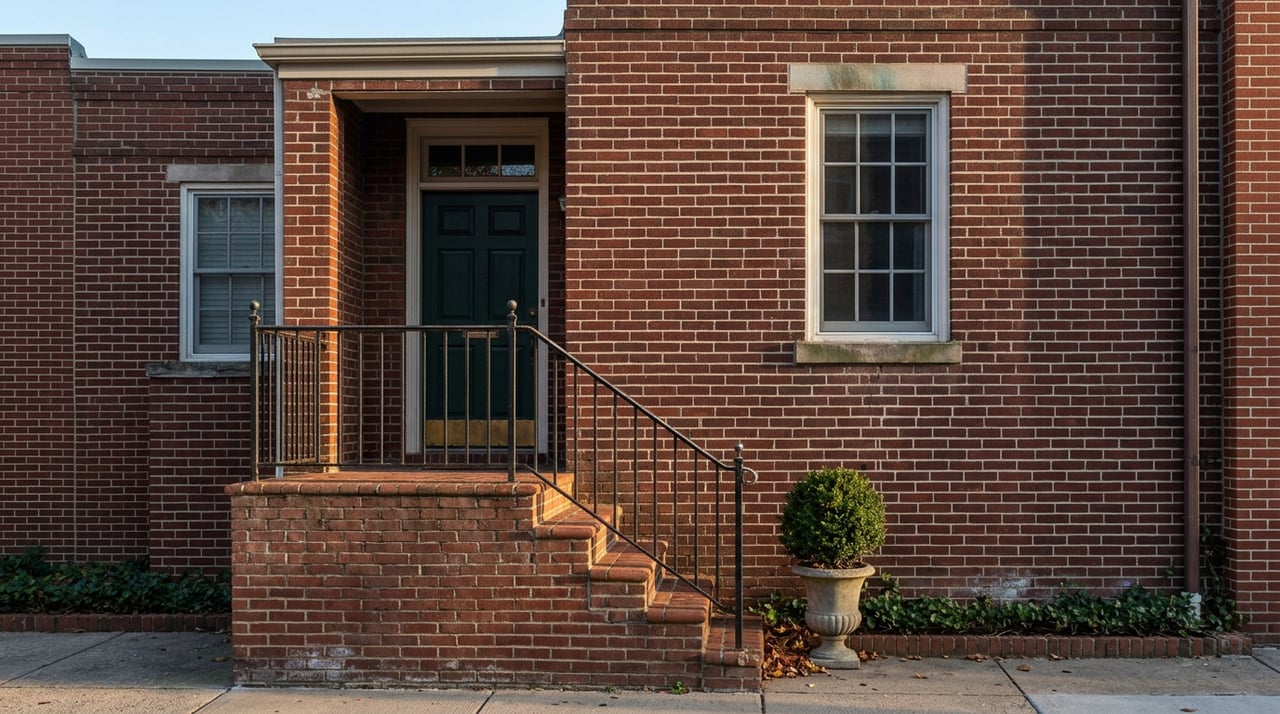
A buyer goes under contract on a Capitol Hill rowhouse listed as a single-family home. The tax record says one unit. The buyer's lender assumes a normal 30 to 45 day close. Then the title company finds a lease for a basement apartment with its own kitchen and a separate entrance, and the whole timeline changes, because the property that was marketed as single-family is, for purposes of DC's Tenant Opportunity to Purchase Act, actually a two-unit building with a tenant who has real purchase rights.
That gap between what a listing says and what DC law sees is the part of TOPA that catches buyers off guard in 2026, not the law itself. Most people who hear the phrase "Tenant Opportunity to Purchase Act" assume it applies broadly and slows down every DC sale with a renter in it. That assumption was already out of date before this year. It's more out of date now that the District's newest housing law, the RENTAL Act, took effect on December 31, 2025.
The Exemption Almost Nobody Talks About
TOPA has existed since 1980, giving tenants the first right to buy their building when an owner decides to sell. But since 2018, most of the properties Anthony's clients actually buy and sell in DC, single-family homes, condos, and co-ops with one rental unit, have been exempt from full purchase rights under the TOPA Single-Family Home Exemption Act. The only tenants who kept those rights after 2018 are elderly (62 or older) or disabled tenants who signed a lease by March 31, 2018 and moved in by April 15, 2018, a window that's now closing on its own as those tenancies end.
For everyone else, and that's the large majority of rowhouse and condo transactions in the District, the tenant does not get to buy the home or block the sale. That's the part of TOPA that most fear about is already solved.
Exempt Doesn't Mean Skip the Paperwork
Here's where the confusion actually costs people time. Being exempt from TOPA purchase rights does not mean the seller can skip DC's notice process. It just means the process is shorter and its outcome is predictable, as long as it's followed in order.
For a single-family exempt sale, the sequence looks like this:
- The owner delivers Form 1, the Notice to Tenant of Landlord's Receipt or Solicitation of an Offer to Sell, within three calendar days of getting an offer.
- Copies go to the tenant, the Office of the Tenant Advocate, and DHCD on the same day, by trackable delivery.
- The tenant has 20 days to respond, either asserting elderly or disabled status through Form 4 or letting the window lapse.
- Once that 20-day period closes without a valid claim, the file can be confirmed clean, and closing proceeds.
None of that changes whether the tenant has purchase rights. It just has to happen, in order, before a title company will confirm the sale is free of TOPA complications. Skip a step, mail a notice late, or forget to copy DHCD, and a 30-day closing can slide by weeks while the paperwork gets redone, even on a property where the tenant was never going to have a real claim.
The practical fix is simple: build the notice timeline into the contract from day one, not after inspection. On a DC deal with any tenant in place, that means the listing agent should already have Form 1 out the door before showings even start.
When the Tax Record Lies About What You're Buying
The bigger risk isn't the paperwork on a clearly single-family home. It's the DC rowhouse that reads as single-family on the tax record but has been informally split into two rental units, a main-floor apartment and a basement unit with its own entrance, kitchen, and bathroom. This pattern is common across Capitol Hill, Petworth, and other rowhouse blocks where owners added a basement unit for rental income over the years.
DC's definition of a single-family accommodation is based on the physical structure and how it's actually used, not on what's written in the county tax file. A building that functions as two rental units is a two-unit building for TOPA purposes, full stop, regardless of what the assessment record calls it. That means the tenant in that basement unit may have genuine purchase rights and a real ability to slow or complicate the sale, something a buyer relying on the MLS listing or the tax classification would never see coming.
DC has also been paying closer attention to conversions like this. Any rental unit in the District needs its own rental license and inspection, and unpermitted conversions have become a growing target for code enforcement as the city has expanded its rental housing inspection program in response to tenant complaints about unlicensed units. A buyer who assumes "single-family" means "one unit, straightforward exemption" can walk into both a TOPA surprise and a licensing question at the same time.
The fix here isn't complicated, but it does require asking the right question before writing an offer: how many separate living units does this property actually contain, and are there current leases for each one? That's a conversation for the listing agent and the seller's attorney, not something that shows up automatically in a property search.
What Changed on December 31
The RENTAL Act didn't touch the single-family exemption that's been in place since 2018. What it did was widen the map of properties that fall outside TOPA's full purchase-rights process, mostly in ways that matter more to small multifamily owners and investors than to the typical single-family or condo buyer.
| Property type | TOPA status as of late 2025/2026 |
|---|---|
| Single-family home, one rental unit | Exempt from purchase rights since 2018, except a narrow group of elderly/disabled tenants under the 2018 grandfather window |
| Condo or co-op, single rental unit | Same exemption as single-family |
| 2-4 unit building, individually or small-LLC owned | Newly exempt under the RENTAL Act, if not majority owned by a corporation |
| 2-4 unit building, corporate-owned | Still subject to TOPA |
| Building under 15 years old (from certificate of occupancy) | Newly exempt under the RENTAL Act, applied retroactively |
| Building with 5 or more units | Still fully subject to TOPA, with a new 45-day cooling-off period before a tenant association can assign its purchase rights |
The retroactive piece is worth sitting with for a second. A building that got its certificate of occupancy 10 years ago is now exempt for another five years under the new law. That's a meaningful shift for anyone weighing a small multifamily purchase in a newer part of the District, and it's the kind of detail that only shows up if you're tracking DC housing law past the headline.
Building the Timeline Right
None of this changes the basic math on a DC closing. Deals here still typically run 30 to 45 days from accepted offer to settlement. What changes is whether TOPA sits quietly in the background as a two-day paperwork step or becomes a genuine variable in the timeline, and that depends entirely on getting the property's actual tenancy picture right at the start, not discovering it during underwriting.
For anyone moving into DC from Northern Virginia or Maryland, this is exactly the kind of jurisdiction-specific detail that doesn't carry over from one state to the next. Virginia and Maryland closings don't have a TOPA equivalent, which means a buyer used to a Fairfax or Arlington contract timeline can be caught off guard by a step that simply doesn't exist across the river.
Common Questions
Does TOPA apply if I'm buying to live in the home myself, not rent it out? Yes, the exemption depends on the tenant's status at the time of sale, not the buyer's plans. If there's a current tenant when the property goes under contract, the notice process still applies, even if you intend to move in and end the tenancy after closing.
If I'm buying a rowhouse in Northern Virginia or suburban Maryland instead, does any of this apply? No. TOPA is a DC-specific law under the DC Code. Virginia and Maryland don't have an equivalent tenant purchase right, which is one of the sharper differences buyers comparing DC to nearby Virginia and Maryland markets need to understand before assuming a closing timeline will look the same on both sides of the river.
How do I actually confirm whether a DC rowhouse is one legal unit or several? Ask for the certificate of occupancy and copies of any current leases, not just the tax assessment. DC requires separate rental licensing for each unit in a building, so that paperwork, or the lack of it, tells you more about the real unit count than the MLS listing ever will.
Buying or Selling in the District, Get the Timeline Right the First Time
TOPA isn't the obstacle most people picture, but the paperwork and the property research around it still decide whether a DC closing runs on schedule. Whether you're comparing a Capitol Hill rowhouse to a home in McLean or Bethesda, or you already know DC is where you want to land, getting the tenancy details right before you write an offer saves weeks later. Explore the Washington, D.C. neighborhood guide for more on what buying across the river looks like, or read how a Northern Virginia agent coordinates cross-state moves when a client's search spans Virginia, Maryland, and DC.
Cross-jurisdictional deals reward an agent who already knows where the paperwork lives. Contact Anthony Anytime to talk through a DC purchase or sale before you're under contract, not after.