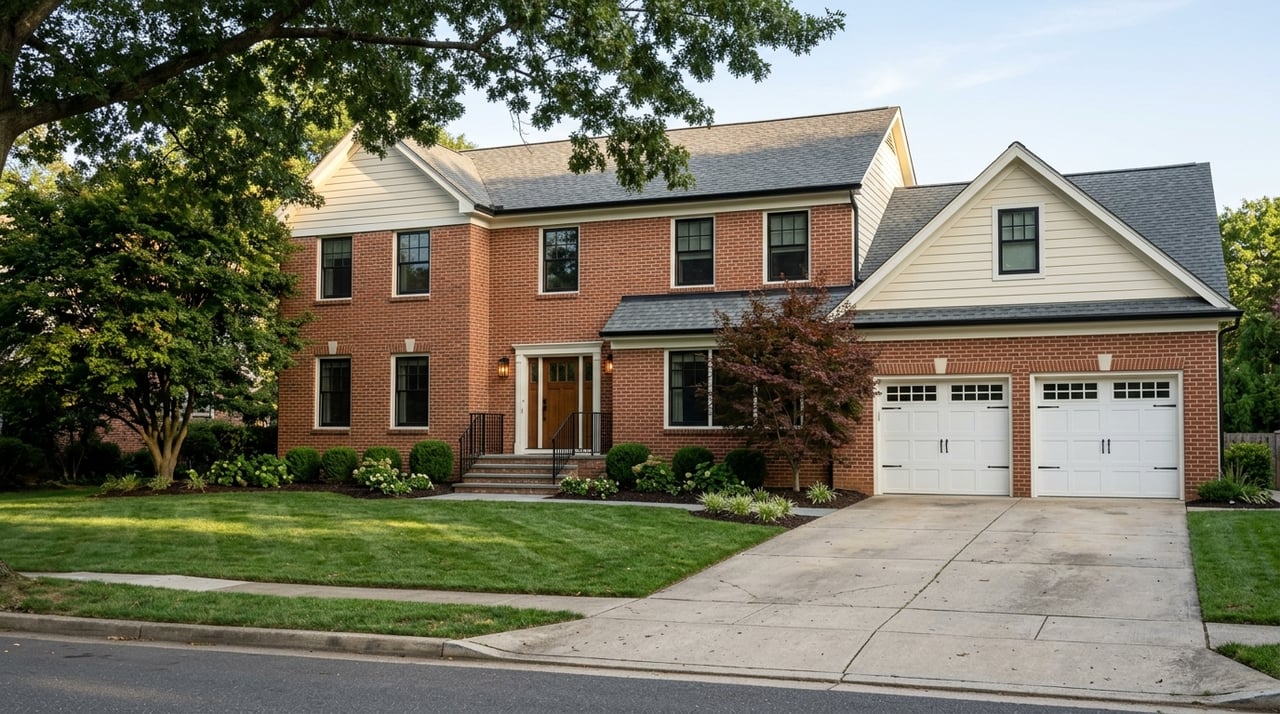
Wondering whether a brand-new home or a rebuilt home makes more sense in McLean? You are not alone. In this market, the choice often is not between a new subdivision and an older resale, but between a newly built infill home and a house that has been rebuilt or significantly renovated on an existing lot. If you understand how lot fit, permits, efficiency, and resale factors work in McLean, you can make a smarter decision with less stress. Let’s dive in.
Why This Choice Matters in McLean
In McLean, most residential areas are shaped by Fairfax County’s planning framework, which describes much of the area outside Tysons and a few other districts as stable, low-density residential neighborhoods. Along the Potomac, low-density residential areas are generally limited to large-lot single-family uses. That matters because many homes you will compare sit within established neighborhood patterns, not in master-planned new developments.
For you as a buyer, that means the label on the listing only tells part of the story. A home may be marketed as new construction, but it still has to work within the lot, zoning, and surrounding streetscape. A rebuilt home may look older on paper, yet offer a strong layout and a better fit on the parcel.
New Construction in McLean
New construction usually offers the appeal of a fresh start. You may see newer materials, updated systems, modern floor plans, and fewer near-term repair concerns. In many cases, that can make move-in feel simpler and more predictable.
Still, a new house in McLean does not get unlimited freedom just because it is newly built. Fairfax County notes that setbacks and other zoning requirements may apply, and separate county review may be needed for issues like floodplain or Resource Protection Area conditions. In other words, the lot still sets the rules.
What New Construction Often Does Well
A true new build can be designed as a whole system from the start. That can help with room flow, natural light, storage, and mechanical efficiency when the design is done thoughtfully. It may also give you a more consistent finish level throughout the house.
Energy performance can also be a plus. The EPA states that ENERGY STAR certified new homes are at least 10% more efficient than homes built to minimum code. The same EPA guidance also notes that WaterSense labeled homes are 30% more water-efficient than typical new construction and can save an average family about 50,000 gallons of water and roughly $700 per year in water and energy bills.
What to Watch With New Construction
The biggest misconception is that new automatically means better. In McLean, two homes with similar finishes can have very different long-term appeal if one feels natural on the lot and the other feels forced into the site. Fairfax County’s McLean guidance emphasizes compatible infill and a design that matches the area’s use, type, and intensity.
You also want to confirm the project history. Fairfax County’s residential permitting process can involve review by building plan review, zoning, wastewater, and the fire marshal’s office, and a Residential Use Permit is issued only after final inspections are complete. If you are considering a newer home, make sure the final approvals are part of your due diligence.
Rebuilt Homes in McLean
A rebuilt home can mean several different things. It may be a major renovation, a partial rebuild, or a complete teardown followed by a new house on the original lot. That difference is important because the value and risk profile can change a lot depending on what was actually done.
In McLean, rebuilt homes often sit on established lots with mature landscaping and a neighborhood context buyers already know well. Sometimes that gives you a combination that is hard to find in a pure new-build setting: a more settled streetscape with improved interior finishes and systems.
What Rebuilt Homes Often Do Well
A rebuilt home can preserve the advantages of an existing lot while improving the parts buyers care about most. You may get a better-sited house, more useful outdoor space, or a footprint that still leaves room for future changes. In some cases, that practical lot relationship can matter more than whether the home is technically brand new.
Rebuilt homes can also perform well on efficiency if the work was comprehensive. The Department of Energy says optimizing efficiency in a new home or an extensive remodel requires a whole-house systems approach. That means the best rebuilt homes are not just about pretty finishes. They also address insulation, windows, HVAC, air sealing, and how those pieces work together.
What to Watch With Rebuilt Homes
The key question is simple: what exactly was rebuilt? Cosmetic updates are very different from a true structural transformation. A beautiful kitchen and new floors do not tell you whether the major systems, envelope, and permitting story are equally strong.
This is also where lot verification becomes especially important. Fairfax County notes that residential plats can show where structures sit on the property and can document easements and restrictions. If a home has been rebuilt or expanded, the true value may depend on whether the current footprint still leaves room for future additions, outdoor living, driveway adjustments, or simply more breathing room from neighboring homes.
Lot Fit May Matter More Than Age
In McLean, lot fit is often the deciding factor. Fairfax County’s planning guidance for McLean repeatedly points to compatible infill and well-designed projects that fit the neighborhood pattern. That gives you a useful lens when you compare homes that may look similar online.
A house that feels oversized, awkwardly placed, or too customized for its block may be harder to love later, even if the finishes are impressive today. By contrast, a rebuilt home or new home that sits naturally on the lot and respects the existing context may offer stronger long-term appeal.
Questions to Ask About the Lot
Before you write an offer, it helps to answer a few practical questions:
- Does the plat show the home’s exact location on the property?
- Are there easements or restrictions that affect outdoor use?
- Do setbacks limit what can be added later?
- Was the site reviewed for floodplain or Resource Protection Area issues?
- Does the current layout leave room for flexibility in the future?
These questions matter because Fairfax County says land use depends on both the Comprehensive Plan and the zoning ordinance. A home’s legal and physical constraints can shape what is realistically possible on that lot.
Comparing Efficiency and Operating Costs
If lower monthly costs matter to you, do not stop at cosmetic appeal. Ask for evidence of efficiency features and ratings. Newer construction may have an advantage, but rebuilt homes can compete when the renovation was done in a coordinated, whole-house way.
A useful shortcut is to look for documentation. The research suggests that HERS ratings are most often used for newly constructed homes, while Home Energy Scores are commonly used for older homes. You may also want to ask whether the property has ENERGY STAR certification or a WaterSense label.
A Practical Way to Compare
Here is a simple comparison framework you can use while touring homes:
| Factor | New Construction | Rebuilt Home |
|---|---|---|
| Systems age | Usually all new | Depends on scope of work |
| Layout design | Often planned as one package | May mix old footprint with new updates |
| Efficiency proof | May have HERS, ENERGY STAR, WaterSense | May have Home Energy Score or upgrade records |
| Lot relationship | Can be strong or weak depending on design | Often benefits from established lot context |
| Future flexibility | Limited by zoning and site conditions | Also limited by zoning, plats, and prior expansion |
The point is not that one category always wins. It is that documentation helps you compare beyond the staging and finishes.
HOA and Disclosure Issues to Review
Some McLean properties are part of an HOA or similar association. If that applies, Virginia’s Resale Disclosure Act becomes part of your due diligence. Under that law, the seller must obtain and provide the resale certificate, and the association generally has 14 days to deliver it after a written request.
The resale certificate includes the governing documents, rules, and regulations. It can also affect your timing, since the buyer may have a cancellation right tied to when the documents are delivered, with a default three-day window if no time is specified. If the home is in an association, those details deserve early attention, not last-minute review.
Resale in McLean Depends on More Than the Label
It is tempting to assume that new construction always wins on resale. In McLean, the better question is whether the home fits the county’s land-use framework and nearby comparables. Fairfax County’s planning guidance emphasizes stable residential neighborhoods and compatible infill, which makes fit and documentation especially important.
That means a well-executed rebuilt home may hold appeal just as well as a new home if it feels intentional, well-sited, and properly documented. On the other hand, a home that feels awkward for the block may face more buyer questions later, even if it is newer.
A Smart Buyer Checklist for McLean
When you compare new construction and rebuilt homes in McLean, keep this checklist handy:
- Ask whether the home is a cosmetic renovation, partial rebuild, or full teardown and rebuild.
- Request final permits, inspection records, and the Residential Use Permit if applicable.
- Review the plat for footprint, easements, setbacks, and restrictions.
- Confirm whether the property is in an HOA and review the resale certificate materials.
- Look for a HERS rating, Home Energy Score, ENERGY STAR certification, or WaterSense label.
- Ask whether floodplain, Resource Protection Area, or right-of-way issues were reviewed.
- Evaluate whether the floor plan and footprint fit the lot and neighborhood context.
This is where local guidance can make a real difference. Comparing plats, permit history, association documents, and neighborhood sales before you write an offer can help you avoid expensive assumptions.
Which Option Is Better for You?
If you want a fully integrated design, newer systems, and strong efficiency potential, a new construction home may be the better fit. If you value an established lot, mature setting, and the chance to get major upgrades without sacrificing neighborhood character, a rebuilt home may be the smarter play.
In McLean, there is no one-size-fits-all answer. The best choice usually comes down to how the home fits the lot, how thoroughly the work was done, and how clearly the documentation supports what you are buying. If you want help sorting through those details before you make a move, Anthony C Ford can help you compare the facts, reduce the guesswork, and move forward with confidence.
FAQs
What is the difference between new construction and a rebuilt home in McLean?
- New construction is typically a newly built home, while a rebuilt home may be a major renovation, partial rebuild, or full teardown and rebuild on an existing lot.
Why does lot fit matter when buying a home in McLean?
- Lot fit matters because Fairfax County planning and zoning rules can affect setbacks, footprint, future additions, and how naturally the home fits the neighborhood pattern.
What permits should you check for a McLean new construction or rebuilt home?
- You should ask for final permits, inspection records, and confirmation that a Residential Use Permit was issued after final inspections if required.
How can you compare energy efficiency for homes in McLean?
- You can ask for documentation such as ENERGY STAR certification, WaterSense labeling, a HERS rating, or a Home Energy Score, depending on the age and type of home.
What HOA documents should you review for a McLean home purchase?
- If the property is in an HOA or similar association, you should review the resale certificate, governing documents, rules, regulations, fees, and any special assessments.
Is a rebuilt home always a better value than new construction in McLean?
- Not always. The stronger value usually depends on the scope of work, permit history, efficiency improvements, lot fit, and how well the property aligns with neighborhood context and nearby comparables.