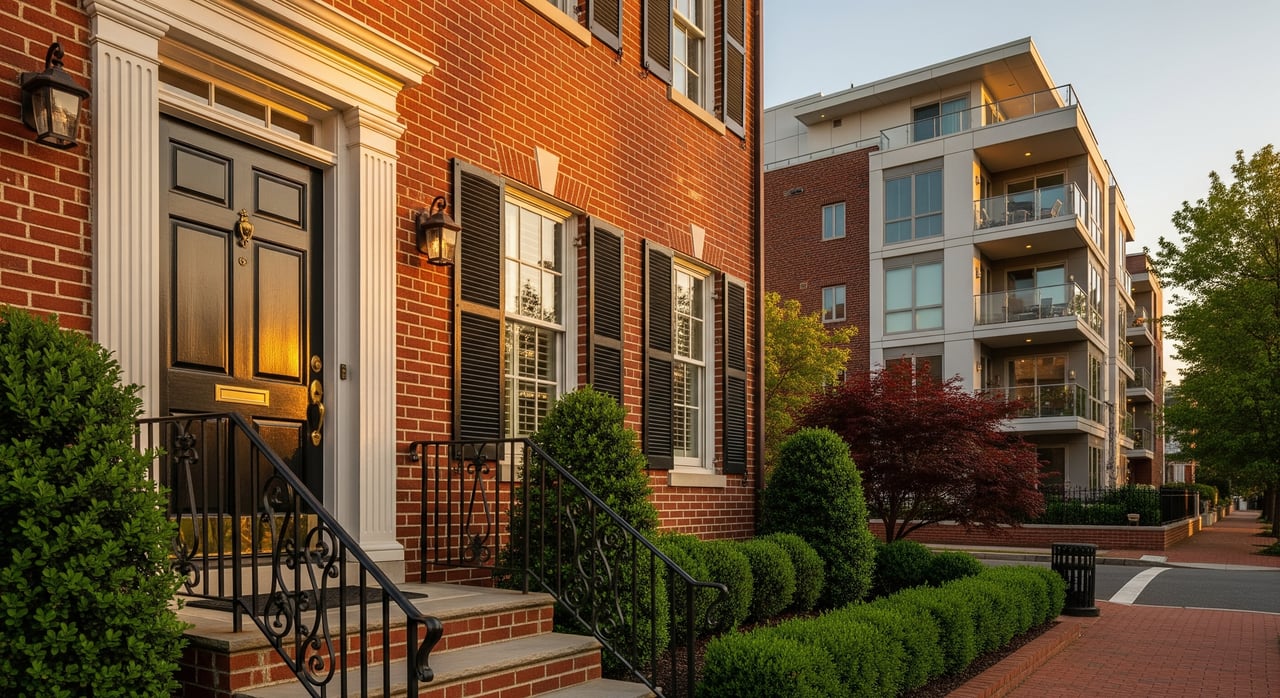
Trying to decide between a townhome and a condo in Fairfax? Both can be great choices, but the right fit depends on how you want to live, what you want to maintain, and how you plan to finance your purchase. You also want to think about resale, HOA rules, and where you spend your time day to day. This guide breaks down the trade-offs, with Fairfax City and Fairfax County examples to help you choose with confidence. Let’s dive in.
What you actually own
A condo means you own the interior of your unit and share ownership of the building’s common elements with other owners. The association typically maintains the exterior and common areas, and you help pay for it through monthly dues. You are buying into a larger structure with shared responsibilities.
A townhome is often fee-simple, which means you own the home and the land it sits on. Many townhome communities still have an HOA for roads, landscaping, or amenities. You are more likely to be responsible for exterior items like the roof and siding, but it depends on the community’s rules.
Why this matters: it affects who fixes the roof, how much insurance you need, what the HOA can require, and even how some loans view the property.
Space and layout in Fairfax
- Townhomes typically offer more square footage, multi-level living, private entrances, and often a garage or small yard. They feel more house-like and can work well if you want space to spread out.
- Condos range from garden-style to mid or high-rise buildings. Most are single-level, which appeals if you want fewer stairs. Private outdoor space is limited, though some buildings offer balconies or terraces.
- Fairfax pattern: townhomes are common in suburban neighborhoods across Fairfax County, while condos cluster in walkable areas like Fairfax City, the Mosaic District, and near transit corridors.
HOA dues and monthly costs
Condos often have higher monthly dues because the association covers exterior maintenance, building insurance, common-area utilities, and amenities like a pool or gym. Some buildings also have on-site staff, which increases costs. In return, your personal maintenance burden is lower.
Townhome HOA dues can be lower when the association focuses on shared landscaping, roads, and basic amenities. If a townhome HOA also maintains roofs and exteriors, dues may be similar to some condos. What you pay depends on amenities, the number of homes sharing costs, whether any utilities are included, and the health of the reserve fund.
Key items to review before you decide:
- Recent reserve study and current reserve balance
- History of special assessments
- Operating budget and delinquency rates
- Which utilities or services are included in dues
Maintenance and day-to-day responsibility
Condos shift most exterior responsibilities to the association. The association typically handles roofs, siding, elevators, parking structures, and shared systems. You focus on the interior of your unit.
Townhome owners are more likely to handle exterior upkeep themselves. That can include roof, siding, driveways, and landscaping. Some HOAs take on parts of exterior care, so you need to read the community’s documents to see where your responsibilities begin and end.
Bottom line: choose a condo if you want a lower hands-on maintenance load. Choose a townhome if you want more control over exterior choices and a bit of private outdoor space.
Insurance and risk allocation
Condo owners usually buy an HO-6 policy that covers interior finishes, personal property, and liability. The association’s master policy typically covers the building structure and common elements as defined by the condo documents. Ask how the master policy handles structural coverage and deductibles to avoid gaps.
Townhome owners commonly carry a broader homeowners policy that covers the structure and land unless the HOA explicitly takes responsibility for certain exterior elements. Costs can vary based on the building type and whether the community sits near a floodplain or other risk area.
Tip: get quotes for both policy types early so you understand your true monthly cost.
Amenities, lifestyle, and security
Condos often include amenities like a fitness center, pool, common rooms, concierge, or secured access. These features add convenience and social options, but they also increase dues. This lifestyle tends to fit buyers who want a lock-and-leave setup with on-site perks.
Townhomes can still be in communities with pools, trails, and playgrounds, but many buyers choose them for private space rather than shared amenities. In Fairfax, urban nodes like Fairfax City and the Mosaic District lean into walkability and mixed-use convenience, while suburban communities emphasize space and neighborhood amenities.
Financing and resale in Northern Virginia
Some loan programs, including FHA and VA, have project-level approval requirements for condos. If you plan to use those loans, you need to confirm that the condo project is approved. Townhomes are often treated as single-family properties for financing, though some attached developments may be structured as condos in the legal documents.
Resale depends on location, commute options, school pyramids, and community attributes. Transit-accessible condos near major employment or mixed-use centers can command strong interest despite smaller size. Townhomes often draw buyers who want more space and a private entrance.
Fairfax City vs. Fairfax County
Fairfax City has a compact, walkable feel with more condos and multi-family buildings, plus some townhomes around Old Town Fairfax and the downtown corridors. It works well if you prioritize walkability to shops and restaurants and want maintenance-lite ownership.
Fairfax County is larger and more varied. You will find many townhome subdivisions with garages, yards, and neighborhood amenities, as well as condo buildings near retail hubs and transit. Your commute route to I-66, I-495, Route 50, and Metro or commuter rail can have a big impact on day-to-day convenience and long-term value.
Example patterns to know
- Downtown and Old Town Fairfax: smaller condo buildings with walkability to dining and events, plus select attached townhomes.
- Mosaic District and Merrifield: mixed-use with newer condos and townhomes, strong walkability, and access to retail and transit corridors.
- Planned suburban communities like Burke Centre and Fair Lakes: many townhomes with trails, community amenities, and layouts that feel more like single-family homes.
A simple decision framework
Ask yourself these questions before you start touring:
- Lifestyle: Do you want more space, a garage, and a small yard, or do you want low-maintenance living and walkability?
- Budget: Have you factored HOA dues and insurance into your monthly housing budget?
- Maintenance: Do you want minimal exterior maintenance, or are you comfortable managing a roof and siding over time?
- Location: Which commute routes and school pyramids match your daily life and long-term plans?
- Financing: Will you use FHA or VA financing, and if so, do you need a condo project that has the right approvals?
If you want low-maintenance living and on-site amenities, a condo may be a better fit. If you want more space and a private entrance with some outdoor area, a townhome may suit you better.
What to review before you make an offer
Documents to request early:
- Association declaration, bylaws, rules, budget, reserve study, and meeting minutes from the last 6 to 12 months
- Financial statements and any notice of pending special assessments
- Resale certificate or estoppel letter showing current dues and delinquencies
- Condo master insurance summary and a clear statement of what it covers
- For townhomes, written clarification of which exterior elements the HOA covers and the maintenance history for roofs, siding, and shared infrastructure
Due diligence steps:
- Schedule inspections. Townhomes usually get full home inspections. Condo buyers should still inspect the unit and ask about building issues if anything seems off.
- Review HOA health. Look for long-term projects, special assessment history, litigation, and whether the community is professionally managed.
- Get insurance quotes for HO-6 vs. homeowners policies to compare total cost.
- Talk to neighbors or management about turnover, maintenance response times, and recent major repairs.
How I help you compare options
When you work with me, we build a tailored search across Fairfax City and Fairfax County so you only see homes that fit how you want to live. I filter by property type, HOA fee range, amenities, commute corridors, and financing needs. If you are using FHA or VA, I flag approved condo projects and keep you focused on viable options.
I also request association documents early, review reserve studies and budgets with you, and coordinate quotes for insurance so you can compare apples to apples. During due diligence, I manage inspections, negotiate repairs and credits, and keep your closing on schedule. My goal is to reduce stress, protect your outcome, and help you make a confident choice.
Ready to compare condos and townhomes in Fairfax side by side? Reach out to Anthony C Ford to get started.
FAQs
What is the main difference between a condo and a townhome in Fairfax?
- Condos typically include ownership of the unit interior with shared building responsibilities, while townhomes are often fee-simple where you own the structure and land with more exterior responsibility.
How do HOA dues usually compare in Fairfax condos vs. townhomes?
- Condo dues are often higher because they cover exterior maintenance, building insurance, and amenities, while townhome dues can be lower unless the HOA also maintains exteriors.
What insurance do I need for a Fairfax condo or townhome?
- Condo owners usually carry an HO-6 policy for interior and personal property, while townhome owners often need a broader homeowners policy that covers the structure and land.
Is FHA or VA financing harder with Fairfax condos?
- Some condos require project-level approval for FHA or VA loans, so you should confirm approval status early if you plan to use those programs.
Which tends to resell better in Fairfax, a townhome or a condo?
- Resale varies by location, transit access, school pyramid, and community features, with transit-accessible condos and spacious townhomes both attracting strong but different buyer pools.
How do amenities typically differ between Fairfax condos and townhomes?
- Condos often have on-site amenities like a gym or pool, while townhomes may rely on community amenities and offer more private space like patios or small yards.
What documents should I review before buying a condo or townhome in Fairfax?
- Review the declaration, bylaws, rules, budget, reserve study, recent minutes, resale certificate, insurance summaries, and any notices of pending special assessments.